
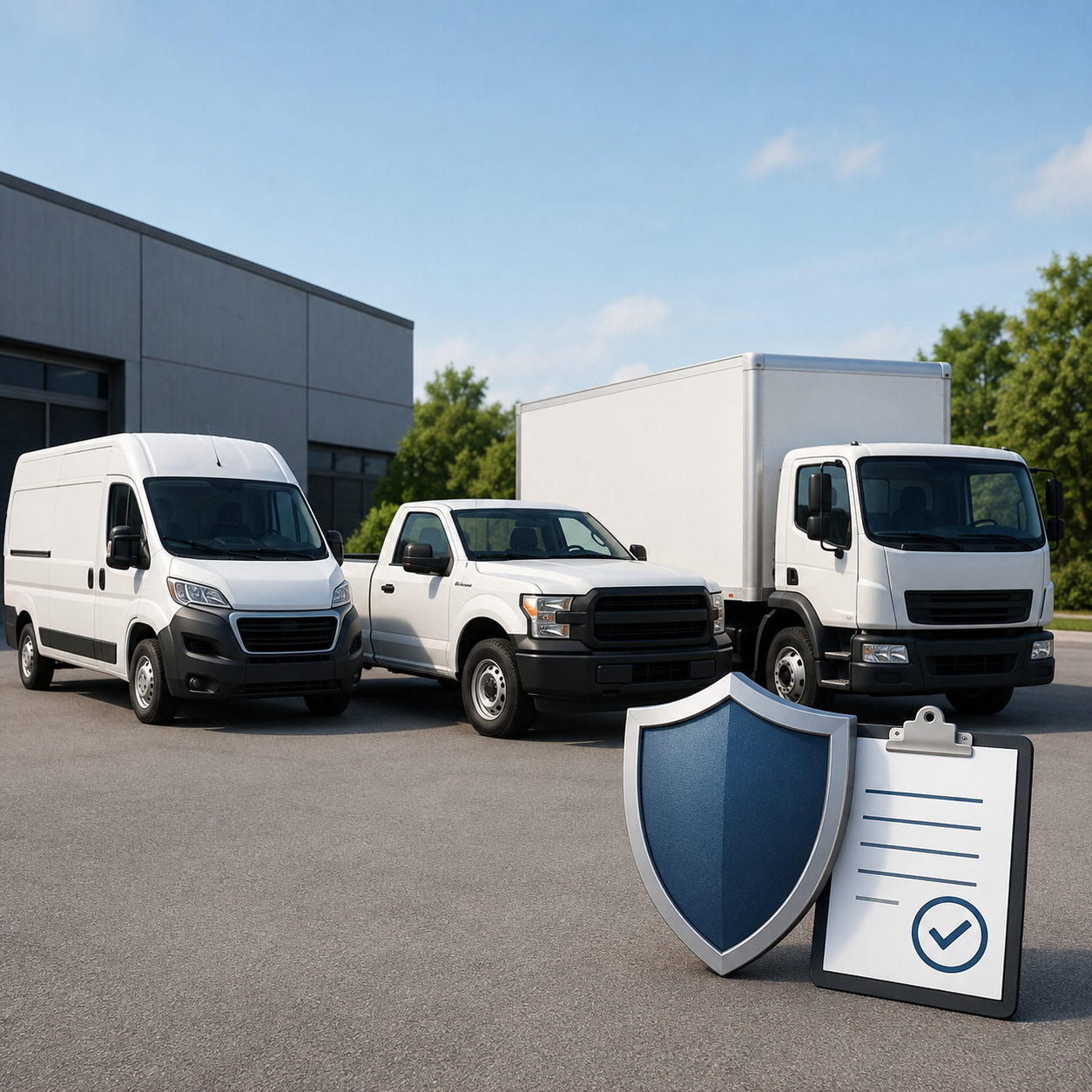
GEICO Commercial Vehicle Insurance may be relevant for U.S. businesses that use cars, pickups, vans, trucks, or other eligible vehicles as part of their work. But a useful commercial policy is not just about choosing a familiar insurer or looking at the premium. The policy needs to match how the business actually operates.
A business owner should consider who owns each vehicle, who drives it, where it is normally kept, what it carries, how often it is used for work, whether employees drive it, whether trailers or rented vehicles are involved, and which coverages and deductibles appear on the quote.
This guide explains how this commercial coverage may work, the main coverage areas to review, factors that can influence cost, information to prepare before requesting a quote, and how to compare commercial vehicle policies fairly.
Educational note: PolicyQuotesUS.com provides independent U.S. auto insurance education. We are not GEICO, an insurer, insurance agency, broker, quote marketplace, claims service, or coverage approval service. Coverage, premiums, deductibles, limits, eligibility, exclusions, endorsements, and underwriting decisions can vary by insurer, state, business, vehicle, driver, and policy. Review the actual quote and policy documents before purchasing or changing coverage.
What GEICO Commercial Vehicle Insurance Is
This coverage is designed for eligible vehicles used in business operations.
Commercial coverage can be relevant to more than large trucks or obvious fleet vehicles. A normal car, pickup, SUV, or van can create commercial insurance questions when it is regularly used to support business activities.
Examples may include:
- A landscaper carrying equipment between customer properties
- A contractor traveling between job sites
- A cleaning business transporting supplies
- A salesperson regularly visiting clients
- A company allowing employees to drive work vehicles
- A business making deliveries
- A mobile service provider using a van or pickup
- A business towing work equipment
The appearance of the vehicle does not decide the insurance question. How the vehicle is owned and used matters.
A personally owned pickup used regularly for business can raise different issues from the same pickup used mainly for personal transportation. Likewise, a sedan owned by a company and driven by employees can require different treatment from a personal vehicle used only for commuting.
For broader state-level background, review auto insurance by state. State rules can affect required coverage, available options, proof requirements, and other insurance obligations.
When GEICO Commercial Vehicle Insurance May Be Needed
A business should investigate GEICO Commercial Vehicle Insurance when a vehicle is regularly used for activities beyond personal driving or ordinary commuting.
Situations worth discussing with the insurer include vehicles that:
- Travel between work sites
- Carry tools, inventory, samples, or business equipment
- Make deliveries
- Transport customers or clients
- Are driven by employees
- Are owned by a company, partnership, or corporation
- Tow business equipment
- Perform mobile services
- Are used regularly for business errands
Vehicle use should be described accurately during the quote process.
Do not describe a vehicle as personal simply because it looks like an ordinary family car. At the same time, do not assume every vehicle connected with a business automatically needs the same type of commercial policy.
Ownership, drivers, use, vehicle type, operating area, and business activity all matter. The safest approach is to describe the real use and allow the insurer to assess eligibility under its rules.
Main Coverage Areas to Review
The policy may include several familiar types of auto coverage. The names can resemble personal auto insurance, but the policy terms, limits, eligible vehicles, covered drivers, exclusions, and endorsements can differ.
Commercial Auto Liability
Commercial auto liability generally addresses covered bodily injury or property damage for which an insured driver or business becomes legally responsible.
A quote may show:
- Bodily injury liability
- Property damage liability
- Split limits or combined limits
- Covered vehicles
- Covered drivers
- Policy exclusions
- Defense provisions
For a broader explanation, see what does liability car insurance cover.
When reviewing GEICO Commercial Vehicle Insurance, do not stop at the words “liability coverage.” Check the actual limits and confirm which drivers and vehicles are included.
A customer, project contract, lender, landlord, or other party may also require evidence of particular insurance limits. Compare those written requirements with the proposed policy.
A legal minimum is not automatically the same as an appropriate business limit. The business should understand the financial exposure it is retaining.
Collision Coverage
Collision coverage generally addresses certain covered damage to an insured vehicle caused by a crash or impact.
Examples can include:
- Hitting another vehicle
- Striking a fence or post
- Backing into an object
- Hitting a building
- Rolling the vehicle
A deductible commonly applies.
The deductible is the amount the business may need to pay toward a covered loss before the insurer pays the remaining eligible amount under the policy terms.
Comprehensive Coverage
Comprehensive coverage generally applies to certain covered non-collision losses.
Examples can include:
- Theft
- Fire
- Vandalism
- Hail
- Falling objects
- Animal contact
- Glass damage
- Certain weather-related losses
The comprehensive vs collision insurance guide explains the general difference between these two physical-damage coverages.
When comparing the policy, review collision and comprehensive separately. One should not be assumed to include the other.
Financed or leased business vehicles may also be subject to coverage requirements from the lender or leasing company.
Uninsured and Underinsured Motorist Coverage
Depending on the state and policy, GEICO Commercial Vehicle Insurance may include or offer uninsured and underinsured motorist protection.
Uninsured motorist coverage can apply in certain covered accidents involving a driver without insurance.
Underinsured motorist coverage can apply in certain situations where the responsible driver has insurance but the applicable limit is not enough for the covered loss.
Availability, definitions, limits, and requirements vary.
The PolicyQuotesUS guide to underinsured motorist coverage explains the general purpose of this protection.
Do not assume uninsured or underinsured motorist protection is included simply because liability coverage appears on the quote. Check the actual selections and policy wording.
Medical Payments and Personal Injury Protection
Depending on the state and policy, medical payments coverage or personal injury protection may also appear on a commercial auto quote.
Review:
- Who qualifies for benefits
- Which vehicles are covered
- Applicable limits
- Important exclusions
- State requirements
- How the coverage works with other insurance
The same coverage name may not operate identically in every state or policy.
Hired and Non-Owned Vehicle Coverage
A business may use vehicles it does not own.
Examples include:
- Rental vehicles
- Borrowed vehicles
- Employee-owned cars
- Temporary replacement vehicles
- Other non-owned vehicles used for business
The commercial policy should be reviewed carefully when these situations exist.
Hired-auto and non-owned-auto protection are not necessarily the same, and neither should be assumed merely because the business already has commercial coverage.
An employee using a personal car for a business errand creates a different ownership situation from an employee driving a company-owned van every day.
Ask how the proposed policy treats:
- Liability involving rented vehicles
- Borrowed vehicles
- Employee-owned vehicles
- Physical damage to hired vehicles
- Driver restrictions
- Deductibles
- Rental agreement obligations
The policy wording controls the result.
Tools, Equipment, Materials, and Cargo
When reviewing GEICO Commercial Vehicle Insurance, pay special attention to business property carried inside or attached to the vehicle.
Insuring the vehicle does not automatically mean everything inside it is insured.
Examples of property that may need separate consideration include:
- Power tools
- Landscaping equipment
- Cleaning equipment
- Merchandise
- Inventory
- Customer property
- Building materials
- Computers
- Portable machinery
- Trade equipment
Permanently attached equipment may also be treated differently from loose or portable equipment.
Ask how the policy treats:
- Permanently installed equipment
- Removable equipment
- Tools stored in the vehicle
- Materials
- Cargo
- Inventory
- Customer property
Another form of business insurance may be needed for some of these exposures.
This is one reason a business should avoid relying on vague phrases such as “full coverage.” The useful question is which specific property and risks the policy actually covers.
Trailers and Towing
Businesses that tow trailers should disclose that activity when requesting GEICO Commercial Vehicle Insurance.
Trailer coverage can depend on factors such as:
- Trailer ownership
- Trailer type
- Size
- Business use
- What it carries
- How frequently it is towed
- Whether physical-damage coverage is requested
- Whether equipment is permanently attached
Ask whether the trailer must be specifically listed.
Also distinguish between liability while towing and physical damage to the trailer itself. One should not be assumed to provide the other.
When a trailer is important to daily operations, its insurance treatment should be clear before the business relies on it.
Personal Use of a Business Vehicle
A business vehicle may sometimes be used outside working hours.
Examples can include:
- An owner driving a work pickup home
- An employee commuting in a company van
- A business vehicle being used for an occasional personal errand
- A household member potentially driving the vehicle
Personal use should be disclosed when relevant.
Ask:
- Is commuting permitted?
- Is personal use allowed?
- Can household members drive?
- Can employees use the vehicle outside work?
- Are there after-hours restrictions?
- Must personal use be listed on the application?
The policy should be evaluated using the real mix of business and personal use rather than assumptions.
Coverage depends on the policy terms, disclosed use, approved drivers, exclusions, and circumstances of a loss.
What Affects GEICO Commercial Vehicle Insurance Costs?
There is no single premium that applies to every business.
Commercial vehicle insurance costs can be influenced by many characteristics of the business, vehicles, drivers, and selected coverage.
Factors may include:
- Business type
- Number of vehicles
- Vehicle type
- Vehicle value
- Business use
- Operating area
- Driving frequency
- Garaging location
- Driver histories
- Claims history
- Liability limits
- Collision coverage
- Comprehensive coverage
- Deductibles
- Trailer use
- Attached equipment
- Other policy selections
A property-maintenance business operating a pickup and cargo van can present a different risk from a professional using one sedan to visit clients.
Even similar businesses can receive different quote results because their drivers, vehicles, locations, policy selections, and claims experience differ.
That is why generic premium examples are not a reliable substitute for a business-specific quote based on accurate information.
How Deductibles Affect the Quote
Deductibles can affect both the premium and the amount the business may need to contribute after a covered loss.
A higher deductible generally shifts more of the initial covered loss to the policyholder. A lower deductible generally shifts less.
Neither choice is automatically suitable for every business.
Consider:
- Available cash reserves
- Vehicle value
- Importance of the vehicle to daily operations
- Premium difference
- Loan or lease requirements
- Ability to absorb an unexpected repair expense
The best deductible for auto insurance guide explains the broader deductible trade-off.
For this commercial policy, the quote and policy documents still control the actual deductible and claim treatment.
Preparing for a GEICO Commercial Vehicle Insurance Quote
Good preparation can make the quote easier to understand and compare.
Before requesting a quote, gather accurate information about the business, vehicles, and drivers.
Business Information
Prepare:
- Legal business name
- Trading name when applicable
- Business structure
- Business address
- Description of operations
- Main operating locations
- Normal travel area
- Contract insurance requirements
Avoid describing the operation so vaguely that important activities disappear.
For example, “maintenance business” may not tell the full story if a vehicle carries tools, tows equipment, travels between several jobs each day, or is driven by employees.
Vehicle Information
For each vehicle, gather:
- Make and model
- Model year
- Vehicle identification number
- Registered owner
- Garaging location
- Vehicle type
- Business duties
- Personal-use information
- Loan or lease information
- Attached equipment
- Trailer information
Also consider what each vehicle carries and where it normally operates.
Driver Information
Prepare information for relevant drivers, which may include:
- Business owners
- Partners
- Employees
- Family members
- Contractors
- Other regular or occasional drivers
Do not list only the main driver when other people regularly operate the vehicle.
Existing Insurance Information
Useful documents can include:
- Current declarations page
- Existing coverage limits
- Existing deductibles
- Prior insurance information
- Claims information
- Contract insurance requirements
- Hired or non-owned vehicle information
The broader what coverage do I need for auto insurance guide can help explain how different coverage layers fit together.
Commercial insurance still requires business-specific review.
How to Compare GEICO Commercial Vehicle Insurance Quotes
A fair commercial vehicle insurance comparison starts with matching vehicles, drivers, limits, deductibles, and business-use details.
If one quote uses different information, the premium difference may not represent a true like-for-like comparison.
Try to keep these details consistent:
- Named insured
- Business name
- Vehicles
- Drivers
- Business activities
- Garaging locations
- Liability limits
- Collision selections
- Comprehensive selections
- Deductibles
- Uninsured or underinsured motorist selections
- Hired-auto coverage
- Non-owned-auto coverage
- Trailer treatment
- Important endorsements
Then compare:
- Total premium
- Payment terms
- Coverage differences
- Exclusions
- Cancellation provisions
- Claims instructions
The car insurance quotes online guide explains the general principle of comparing like with like.
The same discipline matters with commercial insurance because the policy may involve additional vehicles, drivers, business activities, and contract requirements.
A lower premium can be attractive, but first make sure the policy is protecting the same risks.
A Simple Business Example
Imagine a small property-maintenance business with one pickup and one cargo van.
The owner drives the pickup between customer properties. An employee normally drives the van, which carries tools and supplies. The pickup is sometimes driven home. The business occasionally rents another vehicle when one of its vehicles is unavailable.
A useful commercial auto quote should accurately address:
- Both vehicles
- Both regular drivers
- Actual business uses
- Personal use of the pickup
- Liability limits
- Collision and comprehensive choices
- Deductibles
- Tool and equipment exposure
- Rental vehicle use
- Employee-owned vehicle use when applicable
- Trailer use when applicable
This example shows why commercial insurance needs to be evaluated around the real operation rather than premium alone.
A missing driver or business activity can matter more than a small difference in quoted price.
Review the Issued Policy
A quote is not the complete insurance contract.
After GEICO Commercial Vehicle Insurance is issued, compare the policy documents with the application and accepted quote.
Review:
- Named insured
- Business name
- Vehicles
- Vehicle identification numbers
- Drivers
- Garaging locations
- Business-use descriptions
- Liability limits
- Physical-damage coverage
- Deductibles
- Endorsements
- Exclusions
- Effective dates
Report material errors promptly.
Businesses should also understand how to report later changes such as:
- New vehicles
- Replacement vehicles
- New employees
- Different regular drivers
- Changed garaging locations
- New delivery activity
- Trailer use
- Changes in business operations
For a structured pre-purchase review, use the separate GEICO Commercial Auto Insurance pillar.
That article owns the detailed nine-check policy-review process. This guide stays focused on coverage, cost factors, quote preparation, and comparison.
Final Takeaway
GEICO Commercial Vehicle Insurance may be relevant when eligible cars, pickups, vans, trucks, or other vehicles are used as part of a business.
The strongest quote comparison begins with accurate information.
Describe the vehicles, drivers, ownership, business activities, operating area, trailers, equipment, and personal use correctly. Then compare equivalent liability limits, physical-damage coverage, deductibles, hired or non-owned vehicle protection, exclusions, and endorsements.
The value of GEICO Commercial Vehicle Insurance depends on how well the selected policy matches the business’s actual vehicles, drivers, uses, and financial risks.
Do not treat the premium as the whole decision. A commercial vehicle policy is most useful when the paperwork matches how the business actually operates and the owner understands what the policy does and does not protect.
Questions and Answers About GEICO Commercial Vehicle Insurance
What Is GEICO Commercial Vehicle Insurance?
GEICO Commercial Vehicle Insurance is commercial auto coverage for eligible vehicles used for business purposes. Depending on the business and policy, eligible vehicles can include cars, pickups, vans, trucks, and other commercial vehicles.
Is GEICO Commercial Vehicle Insurance Different From Personal Auto Insurance?
Yes. Commercial and personal policies can use similar coverage names, but eligibility, definitions, limits, drivers, exclusions, endorsements, and business-use rules can differ.
Can a Personally Owned Vehicle Need Commercial Insurance?
Yes. Ownership is only one factor. A personally owned vehicle regularly used for business activities may create commercial insurance needs depending on the use, insurer requirements, vehicle, and state.
Does GEICO Commercial Vehicle Insurance Cover Tools?
Do not assume that it does. Commercial auto insurance primarily addresses the vehicle and auto-related risks. Loose tools, equipment, materials, inventory, or other business property may require separate coverage.
Can Employees Drive Commercially Insured Vehicles?
Employees and other drivers may be eligible when they meet the policy requirements. Regular drivers should be accurately disclosed when required.
Can a Business Vehicle Also Be Used Personally?
Possibly. Personal use, commuting, household drivers, and after-hours driving depend on what the policy permits and what was disclosed during the application process.
How Much Does GEICO Commercial Vehicle Insurance Cost?
There is no universal premium. Pricing can depend on the business, vehicles, drivers, operating area, use, liability limits, physical-damage choices, deductibles, claims history, and other underwriting considerations.
How Should GEICO Commercial Vehicle Insurance Quotes Be Compared?
Compare the same vehicles, drivers, business uses, liability limits, physical-damage coverage, deductibles, and important endorsements wherever possible. Matching the underlying terms makes the premium comparison more meaningful.
Should the Policy Be Checked After It Is Issued?
Yes. Compare the issued documents with the application and accepted quote. Confirm that important vehicles, drivers, uses, limits, deductibles, and effective dates are correct.
Helpful Official Resources
- GEICO Commercial Auto Insurance
- GEICO Commercial Auto Insurance Information
- NAIC State Insurance Department Directory
Author Bio
PolicyQuotesUS Editorial Team
The PolicyQuotesUS Editorial Team creates clear, neutral insurance education for individuals and businesses in the United States.
Copyright Notice
© 2026 PolicyQuotesUS.com. All rights reserved.
This original article about GEICO Commercial Vehicle Insurance is protected by copyright and may not be copied, scraped, spun, substantially rewritten, republished, distributed, or used commercially without prior written permission from PolicyQuotesUS.com.
Brief quotations may be used for legitimate commentary or reference when PolicyQuotesUS.com is clearly credited and the original article receives a working link.
Unauthorized automated extraction, AI rewriting, content spinning, close paraphrasing, and substantially similar republication are prohibited.
Disclaimer
This GEICO Commercial Vehicle Insurance guide provides general educational information for businesses and drivers in the United States.
PolicyQuotesUS.com is independent and is not affiliated with, endorsed by, or sponsored by GEICO. GEICO is a trademark belonging to its respective owner.
This article is not personalized insurance, financial, legal, tax, claims, or underwriting advice. It does not guarantee coverage, eligibility, savings, discounts, renewal, policy availability, or claim approval.
Coverage, premiums, deductibles, limits, eligibility, exclusions, endorsements, insurer practices, and claim outcomes can vary by state, insurer, business, vehicle, driver, ownership, policy wording, and the circumstances of a loss.
Review the declarations page, coverage forms, endorsements, exclusions, definitions, and conditions before relying on coverage. A licensed insurance professional or appropriate state insurance regulator can provide assistance when individual guidance or official verification is required.